
Registry-Driven Research Presented at 2026 EASL Congress
In May-June 2026, the EASL International Liver Congress was held in Barcelona, Spain. This annual meeting brings together researchers, clinicians, industry, patient organizations, and others from the field of hepatology to connect on the latest news and research. Two posters presented at the meeting highlight research conducted by the Registry or with Registry support (study development and recruitment).
Burden of Illness in PSC
An international study surveyed individuals living with PSC in the U.S., U.K., Germany, France, and Italy to understand the impact of the disease on quality of life. A particular focus was given towards the impact of pruritus (itch) associated with PSC.
The survey found that the majority (62%) of respondents made lifestyle changes due to their fatigue, a common and often severe symptom of PSC. Almost half (46%) of respondents made employment changes (e.g., reducing hours or changing jobs) because of their PSC. Compared to the general population, people living with PSC had worse fatigue and worse overall health-related quality of life. Poorer quality of life was associated with more severe pruritus.
These findings underscore the significant impact of PSC on daily life directly caused by symptoms of the disease.
Acute Cholangitis: Understanding Symptom Patterns
The Registry’s Cholangitis Attack or PSC Flare survey collects patient experiences with cholangitis attacks (also known as acute cholangitis). Also distributed by PSC Support (U.K.) and the European Reference Network, this international survey is unique in capturing a wide range of symptoms associated with cholangitis, which doctors do not always ask patients about.
Using patient-reported symptoms during their most recent cholangitis attack, clusters of patients with “similar” responses were identified using a statistical algorithm. These groupings were labeled as High, Medium, and Low symptom burdens based on the number of present and number of severe symptoms (see below).
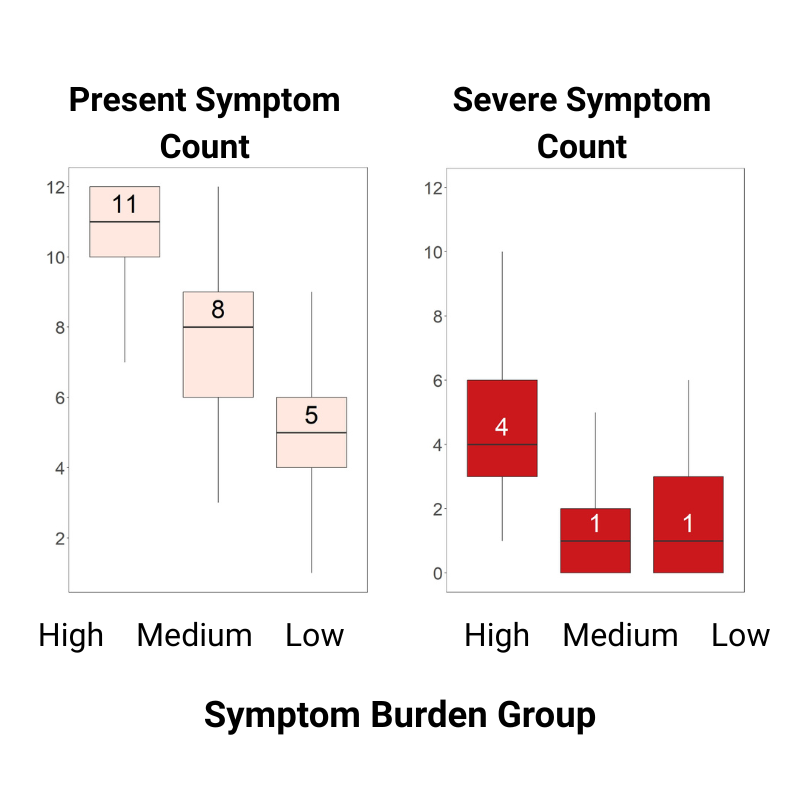
The symptom burden groups that patients were categorized to were not associated with their medical history. Women were more likely to fall into the High symptom burden group, but no other demographics were associated with symptom groups.
However, symptom groups were strongly associated with outcomes of cholangitis. A full return to health was much more common with a lower symptom burden, and longer recovery times were seen in the higher symptom burden groups. There was also an association with antibiotic use, more commonly in higher symptom burdens.

